
Catch Yourself Holding Back in Real Time
not three days later, with a short noticing practice you run in the first 48 hours.
For the woman who has read everything and still holds back the second it gets real.
Allyship? You don't want to burn out. But you don't want to bow out either. These ten lessons give you the practice, the push, and the power to stay in the solidarity zone, even when stepping away feels easier. Building trust and collaboration across difference is uncomfortable and messy right now. But you were made to do hard things. Built over six years across more than forty organizations, taught through the lives of Foremothers who held their ground under far higher stakes. Nautilus Book Award winner. You do the first rep in one sitting; you get six months of short weekly emails to keep you focused, inspired, and growing.
If you took the assessment to get here, you already know the shape of it. You have read at least a couple of the books. You probably sat through a bunch of webinars. You did the book club. You meant all of it.
Maybe it's been hard to say this truth out loud, but deep down you know the reading was just stage one. You did a great job there. But now we all need stage two, the continued doing. And that doesn't come from a book. This is no failure on your part. It's just a different stage, and the old tools didn't set you up for it.
So when a friend posts another reading list, no need to add another to the nightstand stack to gather dust on top of the three titles other friends posted last year. It was never about what is on the nightstand; it was about what is in your heart.
It was never about what is on the nightstand; it was about what is in your heart.
This is not a brand-new idea being tested on you. For six years this work has been taught, in person and to groups, across more than forty organizations, reaching thousands of readers across more than a dozen countries. The book it grew from won a Nautilus Book Award. And the philosophy and design of the practice is the result of several decades living and working in mixed-race spaces, often as "the only one." We've seen it all, and we know when it comes to navigating difference and building solidarity, all that is needed is your willingness to stay in the work.
Every lesson opens with a Foremother whose life modeled the exact move you're about to practice. The Foremothers aren't decoration, they're the curriculum. That's what makes our offering unique to Brave Sis Project. And this is what sets us apart from the pack of self-help, equity, or leadership tools out there.
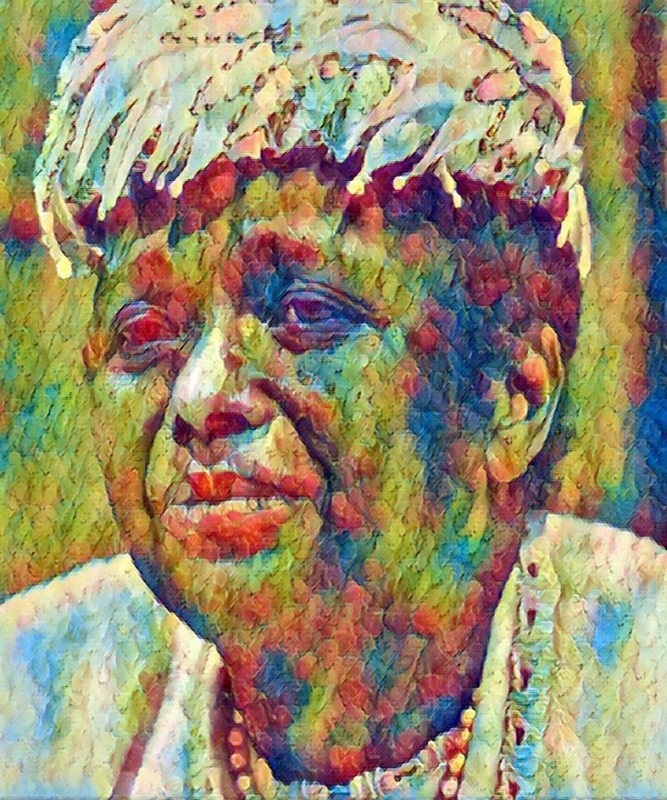
I watched women who had read all the "right" books slip away at the same pace as women who had read nothing. When it came to sustaining solidarity and unity across difference, I knew something was missing. When an ancestral spirit visited me on Christmas morning 2019, she sparked my desire to celebrate the many brave Foremothers who changed the world in countless ways but whose stories were too little known. Over six years I built an equity and leadership practice on the lives of these and other Foremothers, taught it across more than forty organizations, and wrote a book celebrating one hundred of these women, which won the Nautilus Book Award in 2023.
Over six years I built an equity and leadership practice on the lives of these and other Foremothers.

We're not building a toolkit for the really hard conversations. We're skilling you up for any old Tuesday. There are the heavy confrontations around race and difference, but there are also the everyday moments where you can make a difference in small yet important ways. This course is there to set you up for success for those moments.
A white woman in 2026 might feel called into this work because she sees how inequity touches every part of life, and recognizes that these harms are the result of deliberate systems, not accidents or a few bad apples. When she understands that her own safety, comfort, and opportunities are often propped up by those same unjust structures, being simply nice or well-intentioned begins to feel inadequate and hollow. Instead, she becomes motivated to use her privilege, voice, and relationships to interrupt bias, follow the leadership of those most impacted, and commit to long-term, structural change rather than one-time gestures.
And that is why this practice is not for the rarer, big crisis. It's for the PTA meeting, the hiring committee, the water cooler, the book club. Any old Tuesday.
It's for the PTA meeting, the hiring committee, the water cooler, the book club. Any old Tuesday.
Specific moves for the very moments when you hold back, practiced and personalized until they stick.
This course isn't about how to manage your feelings, it's about gaining specific, repeatable skills for the actual scenarios and moments that make it feel easier to stay silent or retreat: what to say first, how to deal with rejection from those you wish to ally with, how to interrupt harm, how to bridge, what to do after something goes south.
not three days later, with a short noticing practice you run in the first 48 hours.
and commit to it for 30 days, instead of a grand gesture you end up abandoning.
that grows your response from sympathy to awareness and action: recognizing and challenging the structures, patterns, and systems underneath what's actually going on.
the three-step sequence for the hardest version of the moment: when a Black woman or other woman of color rejects friendship or relationship in that moment, and the work is to receive it without pursuing her forgiveness or labor.
(Notice, Name, Pause, Redirect, Check-back) in your own go-to language, for the moment harm is happening in front of you.
that replace stepping away with grounded responses you can actually say.
across the parts of your life, from the personal to the community.
that help you notice that typical knee-jerk or learned response, discover a more equitable and inclusive one, and integrate short scripts until the new response just feels natural.
grounded in the SAIN et SAUF philosophy (French for safe and sound: Sustainable, Authentic, Inclusive, Nurturing).
such as Fannie Lou Hamer, Mary McLeod Bethune, Susan LaFlesche Picotte, and many others, even some living leaders, each one modeled on the lesson's teaching.
For many years, I witnessed unsustainable "allyship" behavior, and even if I didn't approve of it, I didn't speak up or put a stop to it, either. I watched so-called allies act like showing up, making a token gesture, reading another book, attending a webinar, even taking a course, was the change. And I let it slide. Even when I knew these acts were mere performance that wouldn't shift inequity or discrimination, just sugar-coating the deeper fracture and distrust that seeks to bury us today. I knew better. Now I'm on a mission to set us all on a better course.
The remedy was never more book-knowledge. In fact, burying yourself in a book often is the best way to ensure you don't do or change anything at all. So instead of heavy reading, this course provides videos, guided practice, and prompts. The whole purpose is how to stay steady and ready in the moment where it gets tricky, and it feels easier to stay silent and just let it slide. This curriculum will skill you up so you can learn the moves and make them yours. You'll get a digital workbook so you can mark and monitor your growth and model Brave Awareness to others.
One of my Solidarity Lab participants, Mel, put it better than I can:
Thanks to this course, I stopped calling myself an 'ally' and instead used 'advocate' so I could focus on taking action instead of patting myself on the back. It's my go-to recommendation for others seeking anti-racism resources.
Mel, Solidarity Lab participant
No one trained you for this moment. That's not your fault. But now that you know, we don't do shame and blame at Brave Sis Project.
We know two things can be true at once: it's not your fault, but in these times, it's your accountability. The system of power in this country was built, from the beginning, to keep some groups in power and others far outside of it. You did not personally do this. But now that we've gotten that part out of the way, let's be real: the work to repair and rebuild is partially yours to do, and very much yours to influence.
So this curriculum treats you like the grown-up you are: you're wise enough to know we have to shift how we approach solidarity, unity, and trust, and you also know a big part of this starts with how you think, act, and influence. I sense you are totally up to the task.
We don't do shame and blame at Brave Sis Project.
Meet Brandi. She's a stand-in for so many of us, a composite of many women I've known and worked with.
Brandi's path is familiar: shock in 2020, books and webinars in 2021, a study group in 2022. She is fluent in the language of inequity and discrimination. She is usually the one her peers look to when a sticky situation arises, someone who brings empathy and action together. But Brandi is tired. All the books and the conversations haven't changed the way the company operates, and it hasn't shifted how her community members support each other, and it certainly hasn't built more trust and unity across the racial or class divisions within her county. Given the direction she sees online and in the headlines, she is no longer sure anything she does makes a difference. And while she doesn't want to say the words "I have diversity fatigue," she's had it with being the change-maker. Maybe this is just the way things are, and there's nothing to do about it. Racism and inequity, exclusion and phobias are just too deeply embedded in our societal norms.
But she isn't sleeping well at night because a big part of her doesn't want to accept that.
Frustration and anxiety are common emotions in this post-DEI age, and feeling tired and wishing to step away is an understandable reflex and a way to seek comfort. But in this moment, Brandi is needed more than ever. Holding back or stepping away may be a comfort reflex, but that's not really who she is nor who she wants to be. Same for you? Let's help you step into solidarity, solidly and sustainably. You don't have to arrive polished at this, just be willing to practice it. That is the whole ask, and it is one you can actually meet.
Many of the Foremothers will teach you about staying steady. The great voting rights activist Fannie Lou Hamer was beaten in a Winona, Mississippi jail in 1963 just for trying to register Black voters, injured for life. But the next year she stood before the Democratic National Convention credentials committee and told the country her truthful testimony. She stayed steady even in the face of punishment and extreme danger. If she could hold her ground under stakes that high, we know Brandi can learn to stay the course, in her company, community, and county. And so can you. You'll learn tools, words, and moves that keep you grounded and ready.
You don't have to arrive polished at this, just be willing to practice it.

The course is built to be finished, in small reps you can sustain, not in one heroic push. As I tell everyone in Lesson 2: pick ONE. Just one. Do it on a Monday night after brushing your teeth. Twenty minutes, one prompt, one thing said out loud, and you're good to go. Unlike the dusty books on the nightstand, you did this thing.
Mary McLeod Bethune, born in 1875, the first child in her family not born into slavery, walked five miles each way to a one-room schoolhouse and built systems and universities that still stand today, one hard-won step at a time. Her life is the model for the Sustainable pillar of this work: you are still in this work in five years, in twenty, however long you live. This is not a flash in the pan, a lightning strike, or a firework. It's you, being your best, evolving, brave, and aware collaborator, activator, and friend to people and communities and causes that matter.
Ten lessons. About twenty hours. Self-paced. Lifetime access, so the next rep waits for you.
This is one rung of the ladder, and it's a big one because it's the first one. For one price, $149, you'll get all ten lessons and the digital workbook. When you finish, there is a deeper practice waiting for you, if you choose. Here is everything that is included:
Let me tell you why we do not offer a money-back model. As a Black woman entrepreneur, my values lie in partnership, not transaction. This course has been built with honesty, integrity, and partnership. The guarantee is actually your own growth and reflection. I cannot promise you all the ills of our post-DEI moment will suddenly evaporate if you take this course. But I can share a methodology and invitation and a communal sense of purpose and commitment that can sustain and encourage you.
So what you will get is a practice for small and then larger steps you can take and sustain, and skills you can model to others, learning at your own pace and in your own safe and supportive, intimate space. One clean price for all ten lessons and the workbook. And when you finish Lesson 10, you will receive an automatic $75 credit toward the deeper curriculum, good for 60 days. This is not a countdown gimmick, but a sincere real thank-you for entering the practice with us.
The full "Unengaged to Ally, Advocate to Sister" curriculum is there when you are ready: $249 for either course on its own, or $500 for both plus three months of office hours with Brave Sis Project.
The guarantee is actually your own growth and reflection.
No, and that distinction matters. Most equity programs were compliance-driven, dependent on institutional will, and built to satisfy organizational liability. When that will disappeared, the work disappeared with it. Solidarity and Unity Praxis is built to outlast any organizational moment. It is grounded in the SAIN et SAUF framework, Sustainable, Authentic, Inclusive, Nurturing, Solidarity and Unity, designed to be practiced in your life, your relationships, and your sphere of influence, with or without institutional permission. You don't need a DEI office to do this work. You need a methodology, and you need encouragement.
In a word, the Foremothers. Brave Sis Project supplements these resources with a living archive of women to inspire us, Black women, Indigenous women, women of color across cultures and centuries who navigated impossible conditions and built something that changed the world, and their stories are not illustrations or decorations, they are the curriculum. The SAIN et SAUF methodology was developed by studying what they actually did: how they led, how they built coalitions, how they repaired relationships, how they sustained joy alongside struggle. When you learn here, you are learning from a tradition, not a trend, and that is what makes the practice transferable and what makes it last.
Fully. Brave Sis Project was built for coalition, not separation. Anyone genuinely committed to equity, not as a brand or a performance, but as a practice, belongs here. What is asked of everyone is humility, consistency, and a willingness to follow as often as you lead.
Allyship cannot be claimed. It can only be conferred, by the people you show up for, not by the identity you adopt. No one gets to decide they are an ally. That is not a title you earn once and keep. It is a verdict others reach about you, based on what you do over time, under pressure, when it costs something. Solidarity is the practice that makes that verdict possible. It requires shared risk, shared credit, and shared accountability, not a declaration, but a track record. The question is never "am I an ally?" The question is: what did I do, and how did my actions help or hinder?
Because training is a one-time event and culture is a daily practice. Most DEI training was designed to reduce organizational liability, not to change how people think, relate, and act over time. If you've led trainings yourself, you may already know this, that the room shifts for an hour and then the organization goes back to what it was. Solidarity and Unity Praxis asks something different: not that you complete a module, but that you build a practice sustainable enough to survive discomfort, setbacks, and the absence of external incentives.
It means questioning the assumption that white experience, white comfort, white timelines, and white leadership are the default, the standard everything else is measured against. In practice: listening before advising, following before leading, funding without controlling, and staying in the room when the conversation stops being comfortable. It is not about self-erasure. It is about making more room.
Relax: you probably will at some point, and that's part of being human. That is not a reason to stay on the sidelines, it is a reason to build relationships sturdy enough to hold repair. The goal is not perfect performance. It is accountable practice: showing up consistently, naming harm when you cause it, and not requiring others to manage your feelings about your own mistakes. The Foremothers made mistakes. They kept working.
Joy is not incidental to this work, it is evidence that the work is real. The Foremothers celebrated. They sang, they organized, they built institutions that were also communities. Cultural competence that is genuinely generous, not extractive, not exoticizing, makes room for pleasure, creativity, and delight. If your practice of solidarity feels only like obligation, it will not last.
Charity positions one group as giver and another as recipient. Solidarity is peerage, shared agency, shared accountability, shared protection. The difference shows up in who sets the agenda, who gets credit, who controls the narrative, and whether the "support" comes with strings. If any involvement requires deference, silence, or gratitude in exchange for access, it is not solidarity. Real partnership can survive disagreement.
With Brave Awareness, a self-paced course built on the SAIN et SAUF methodology, taught through the stories of Black foremothers and other women of color who practiced solidarity across difference under conditions far harder than these. $149, ten lessons, lifetime access. You don't need to have done anything before. You need to be willing to begin.
No. Brave Awareness is not a space where women of color are expected to perform their pain, explain their existence, or carry the emotional labor of other people's learning. The curriculum is built on Foremother wisdom, the teaching comes from the tradition, not from you personally. You are here to deepen your own practice, reclaim a legacy that belongs to you, and find community with others doing the same. What you bring is yours to share on your own terms, or not at all.
Possibly, and that depends on what "doing this work" has meant for you. If it has meant educating others, absorbing harm, and carrying the labor of institutional change without reciprocity, then what Brave Awareness offers may be less about new information and more about restoration. The SAIN et SAUF framework was built to be sustainable, meaning it was built with you in mind, not just the people who need to catch up. Many experienced practitioners find that naming the methodology gives them language for what they have always known, and community practicing alongside them.
You never needed another book. You needed a practice you could rely on, for the hard moments: after you say something insensitive you didn't mean to, or if you stay silent when someone else does it, or when a Black woman or other woman of color rejects friendship or relationship because she's "had it with white people" and your heart breaks a little but you want to stay in the struggle for unity and solidarity, one way or another.
This is that practice. You will rehearse real moments out loud, learn from women who lived through even harder challenges, and build moves you can repeat until they are rock solid. Ten lessons. Twenty hours or so. At your own pace. Digital workbook included. One clean price, $149. And, when you finish, a thank-you that sets you further down the path.
No mastery required. Just the willingness to begin anew.
Nautilus Book Award winner, 2023. More than forty organizations served. Thousands of readers across more than a dozen countries.